Did you know Tripawds Foundation has a Rehab Grant for amputee dogs and cats? It’s true! The consultation, and rehab exercises are covered up to $300 for the first visit. Here’s how Nectar’s people are helping her stay strong and love life on three legs.
Yes! Tri-kitties qualify for free feline rehab too. See all Tripawds who have received free rehab sessions thanks to your support.
Nectar is a 9-year-old husky mix who recently had her left hind leg amputated due to osteosarcoma.
She recovered well from surgery, but I wanted to consult a rehabilitation professional to better understand her needs as a Tripawd.
What We Learned During Our Visit
We were given several exercises, along with range-of-motion stretches and specific areas to target with massage given how her body is compensating and redistributing weight on three legs.
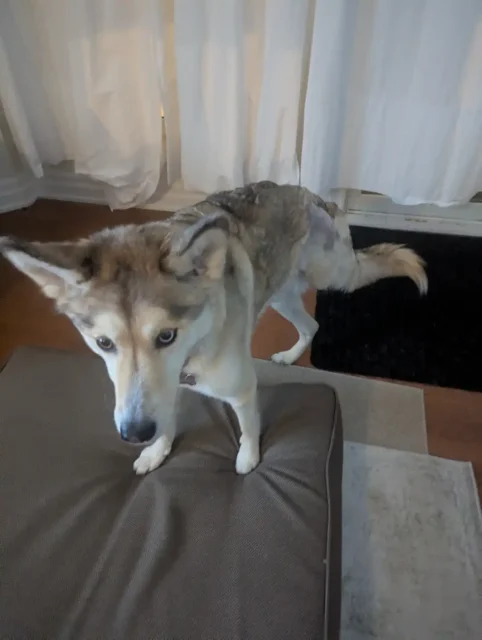
While some exercises were designed to build strength in her remaining limbs, the primary focus was on improving balance and stability by strengthening her core muscles.
Specific exercises to support balance and core strength include:
- balance stands (placing her two front paws on a raised or unstable surface such as a cushion or wobble board)
- weight shifts (applying gentle pressure to her hips while she stands on stable ground to challenge her balance)
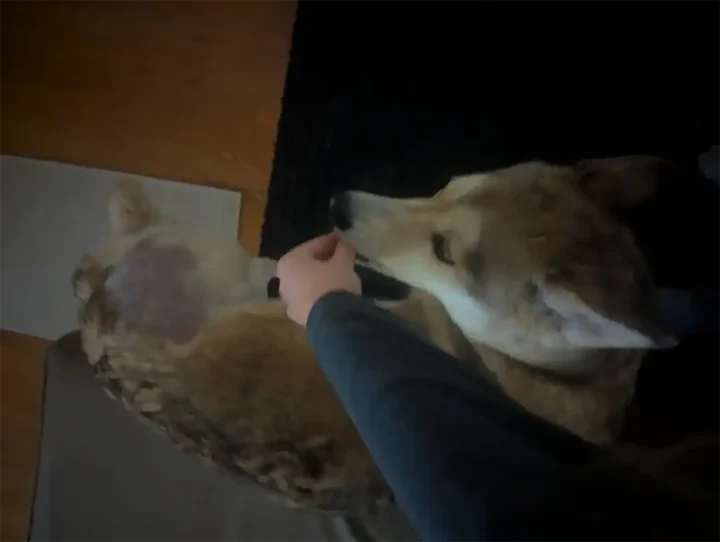
- “Cookie crunches” (luring her head toward her hips and holding for 5–10 seconds) were recommended to improve flexibility and stretch her spine.
Starting Slow and Building Up Strength
As she is only six weeks post-surgery and currently undergoing chemotherapy, we were advised to start with a few repetitions a few times per week to monitor how her body responds.
Range-of-motion stretches and massage can be done daily.
Other low-impact activities, such as walks or gentle hikes, were recommended to support muscle and joint health while building her confidence and endurance.
Overall, short, frequent sessions are preferred over longer or more strenuous activity.
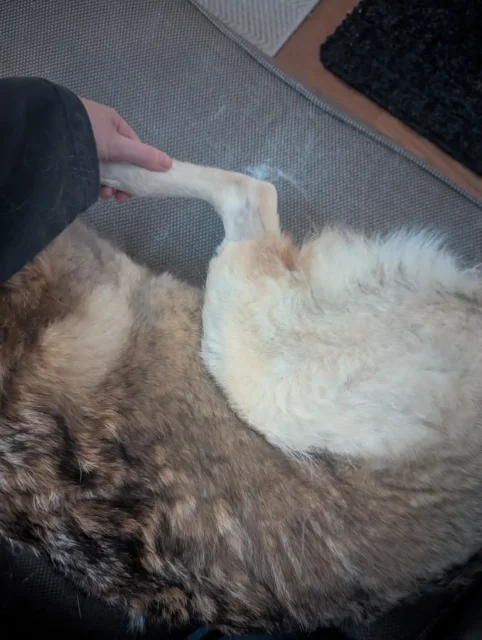
The rehabilitation professional, Natacha Paquette, Rehab Fur Your Pet, also provided exercise modifications and ways to increase difficulty as Nectar improves.
The Value of Long-Term Rehabilitation Guidance
Beyond exercise, we discussed inflammation and joint-support supplements, mobility aids, and adjustments to our home environment to better support Nectar.
Overall, the rehabilitation consultation helped me better understand how Nectar’s amputation will affect her body and her life.
It provided exercises to help her adjust in the short term, as well as guidance on what to monitor long-term to support her quality of life.
— Allison and Nectar
How to Find Rehab Therapy for Tripawd Dogs and Cats
Check Out the at Home Tripawd Rehab Program
(created by veterinary rehab therapist Dr. John Waterhouse)